Tag: Continuous Delivery

  • CD Office Hours Ep.8: AI efficiency and effectiveness

    CD Office Hours Ep.8: AI efficiency and effectiveness

    Continuous Delivery Office Hours Ep.8. AI efficiency and effectiveness
    Continuous Delivery Office Hours
    CD Office Hours Ep.8: AI efficiency and effectiveness
    Loading
    /

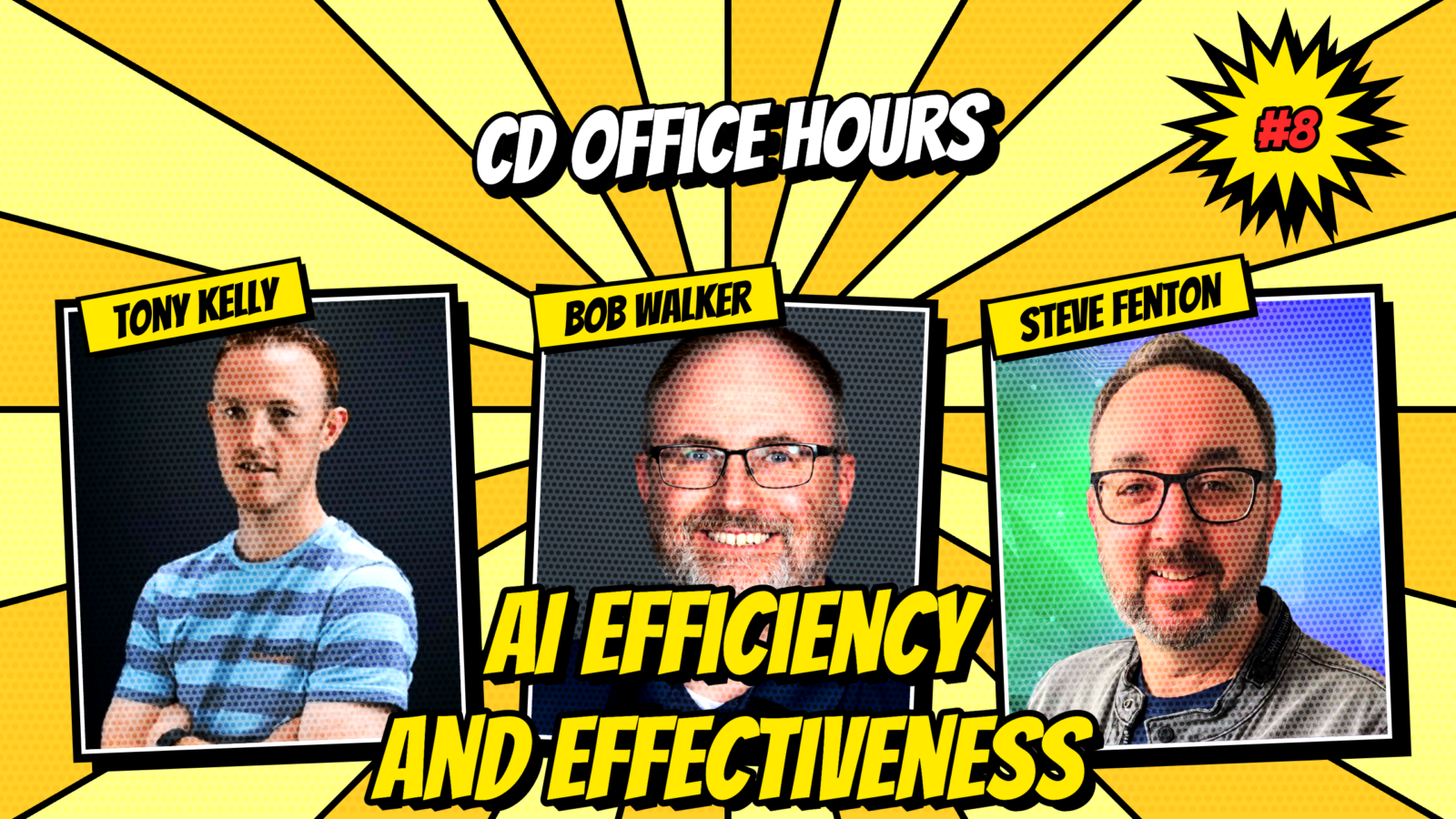
    In this episode of Continuous Delivery Office Hours, Tony Kelly, Bob Walker, and Steve Fenton discuss some of the tangled pathways around AI, the search for efficiency and productivity, and the need to re-focus on effectiveness and outcomes.

    You’ll find out about the beneficiary user versus end user divergence and where asymmetry can cause bad outcomes for end users and, ultimately, organizational goals. This leads to why the organizations succeeding with AI had the right foundations in place before their AI adoption.

    Listen to find out more about:

    • Beneficiary and user asymmetry and how it damages your business
    • The old measurement mistakes that are resurfacing alongside AI
    • Why developer productivity might not be moving the needle for your teams
    • How to easily predict whether an organization will be successful with AI
    • A pizza-oven metaphor for your software delivery

    Episode details
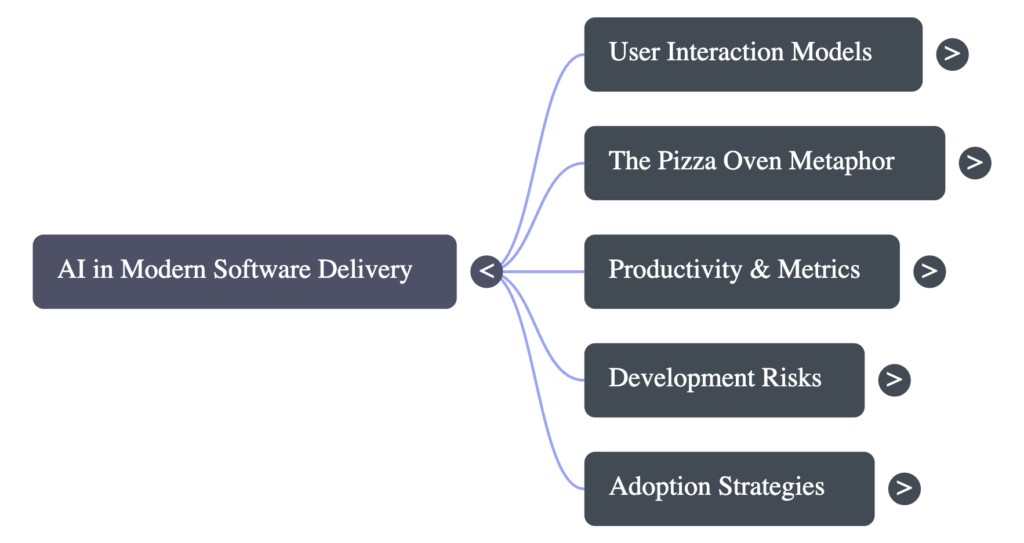
    Episode map showing AI in modern software delivery with nodes for user interaction models, the pizza oven metaphor, productivity and metrics, development risks, and adoption strategies

    You can also watch episodes on YouTube.
  • CD Office Hours Ep.7: Modern multi-tenancy

    CD Office Hours Ep.7: Modern multi-tenancy

    CD Office Hours Ep.7: Modern multi-tenancy
    Continuous Delivery Office Hours
    CD Office Hours Ep.7: Modern multi-tenancy
    Loading
    /

    In this episode of Continuous Delivery Office Hours, Tony Kelly, Bob Walker, and Steve Fenton discuss modern multi-tenancy and how different it is today than during the SaaS revolution.

    Multi-tenancy has a single purpose; sharing resources between users to get higher utilization from physical infrastructure by sharing it. Originally that meant time sharing on a single computer when it was too expensive to put one on every desk (and in every pocket). When SaaS gained traction, it often meant designing a single application to handle the workloads and data for many tenants, which might be entirely different companies.

    Modern multi-tenancy leans into the lightweight containerization options available today, where the sharing can be handled at the infrastructure level and applications no longer need complex architectures to manage multiple tenants. This reduces the amount of compromise surfacing through the application’s design and eliminates many of the scaling challenges.

    Listen to find out more about:

    • Different application architectures for multi-tenancy
    • The goals and own-goals caused by multi-tenanted architecture
    • Real-world stories of multi-tenancy for large-scale applications

    Episode details

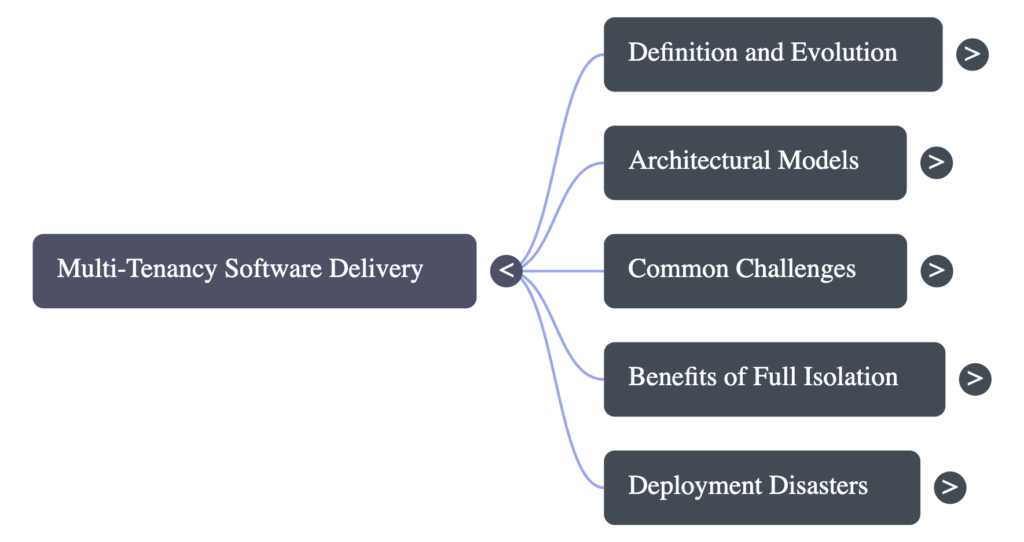
    Episode map showing multi-tenancy topics covered in this episode. Definition and evolution. Architectural models. Common challenges. Benefits of full isolation. Deployment disasters.

    You can also watch episodes on YouTube.
  • CD Office Hours Ep.6: Change approvals

    CD Office Hours Ep.6: Change approvals

    Continuous Delivery Office Hours Ep.6: Change approvals
    Continuous Delivery Office Hours
    CD Office Hours Ep.6: Change approvals
    Loading
    /

    In this episode of Continuous Delivery Office Hours, Tony Kelly, Bob Walker, and Steve Fenton discuss the purpose and common pitfalls of software change approvals. They argue that strict, manual change approval processes are often just a reflex to past organizational trauma and an attempt to have “humans on the hook” to blame, rather than a valuable safety measure.

    Relying on excessive bureaucracy, like formal monthly review boards or demanding multiple manual sign-offs, significantly reduces deployment throughput and, according to DORA research, actually makes systems less stable. Instead, the experts advocate automating the vast majority of checks, like tests, linting, and scanning for dangerous database commands, so that human reviewers step in only to evaluate a filtered subset of complex or high-risk changes.

    Effective change management requires small review requests and daily co-ordination rather than formal change approvals.

    Listen to find out more about:

    • Change approval processes are often based on past organizational trauma
    • Most checks should be automated
    • Excessive manual approvals wreck throughput and reduce stability
    • If you review pull requests, they should be small

    Episode links

    Episode details

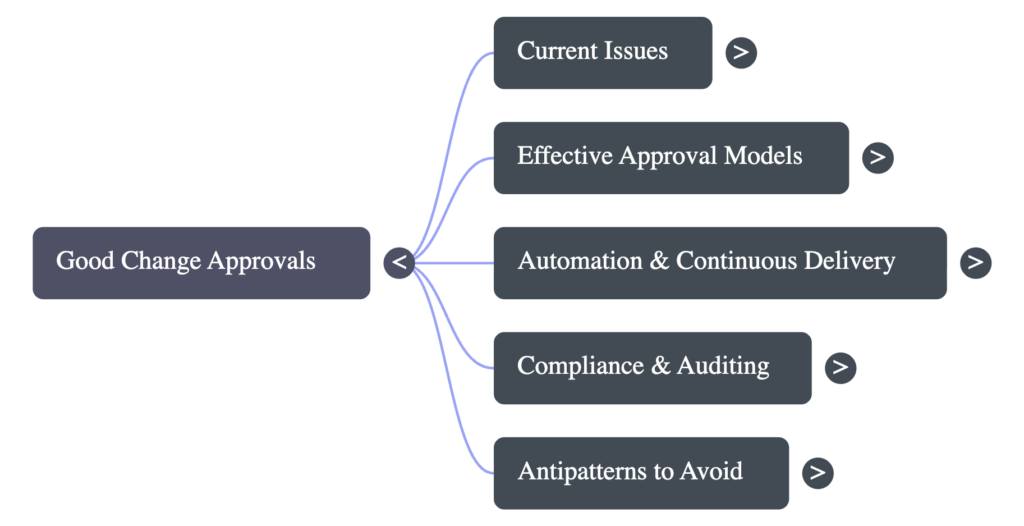
    Map showing good change approvals linking to current issues, effective approval models, automation, continuous delivery, compliance and auditing, and anti-patterns to avoid

    You can also watch episodes on YouTube.
  • CD Office Hours Ep.5: Delivering database changes

    CD Office Hours Ep.5: Delivering database changes

    Continuous Delivery Office Hours Ep.5: Delivering database changes
    Continuous Delivery Office Hours
    CD Office Hours Ep.5: Delivering database changes
    Loading
    /

    While application code deployments have become highly automated and disciplined, database changes often remain manual, “folksy,” and prone to causing messy environment drift. Find out why databases require a uniquely cautious approach due to the severe risks of data loss and the impossibility of simple rollbacks, emphasizing the need to treat database deployments with the same rigor as application code.

    Listen to find out more about:

    • Why databases are fundamentally different
    • Crucial first steps for modernization
    • State-based versus Migration-based approaches
    • Tooling and Automation
    • Test Data Management
    • Database Refactoring Patterns
    • Real-world disaster stories

    Episode details

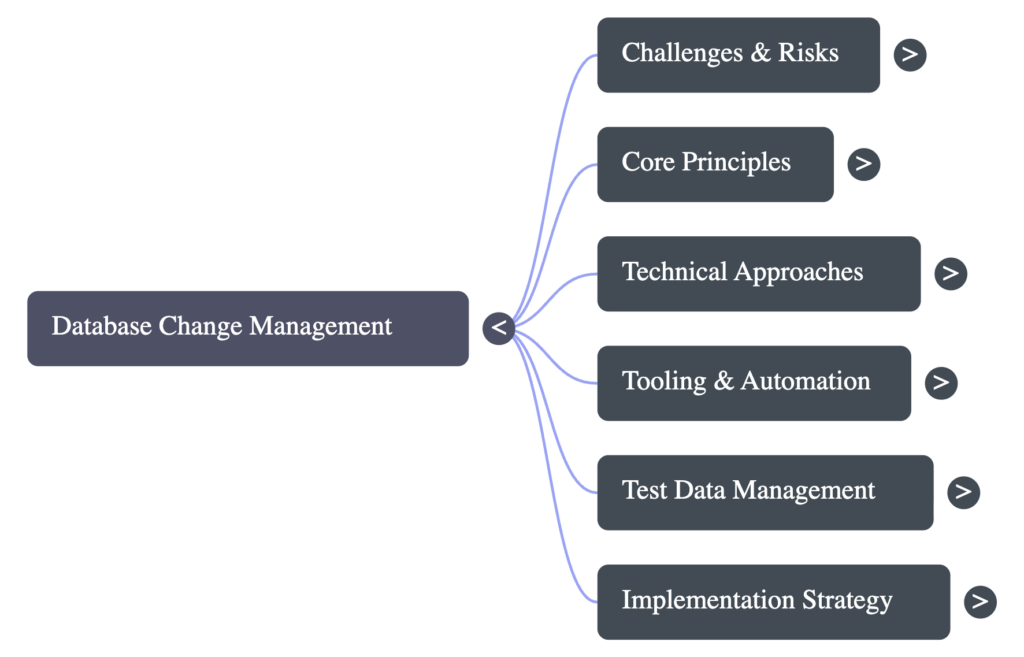
    Map showing database change management connected to challenges and risks, core principles, technical approaches, tooling and automation, test data management, and implementation strategy.

    You can also watch episodes on YouTube.
  • CD Office Hours Ep.4: Mono, Micro, Mesco

    CD Office Hours Ep.4: Mono, Micro, Mesco

    Continuous Delivery Office Hours Ep.4: Mono, Micro, Mesco
    Continuous Delivery Office Hours
    CD Office Hours Ep.4: Mono, Micro, Mesco
    Loading
    /

    Your system’s architecture can support team autonomy, independent deployability, and independent evolution of components, or it can be a sticky mess. This episode looks at whether choosing a monolith or microservices fundamentally changes the crucial properties of your architecture.

    Listen to find out more about:

    • The many factors influencing architecture
    • How team design is part of architecture
    • How to choose between monoliths and microservices
    • The true measure of successful architecture

    Episode details

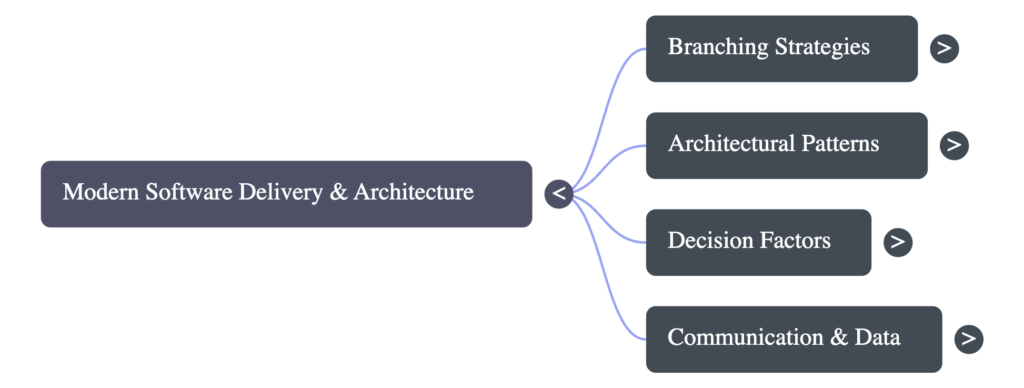
    Episode map showing modern software architecture and delivery, including branching strategies, architectural patterns, decision factors, and communication and data.

    You can also watch episodes on YouTube.
  • CD Office Hours Ep.3: Branching strategies

    CD Office Hours Ep.3: Branching strategies

    Continuous Delivery Office Hours Ep.3: Branching strategies
    Continuous Delivery Office Hours
    CD Office Hours Ep.3: Branching strategies
    Loading
    /

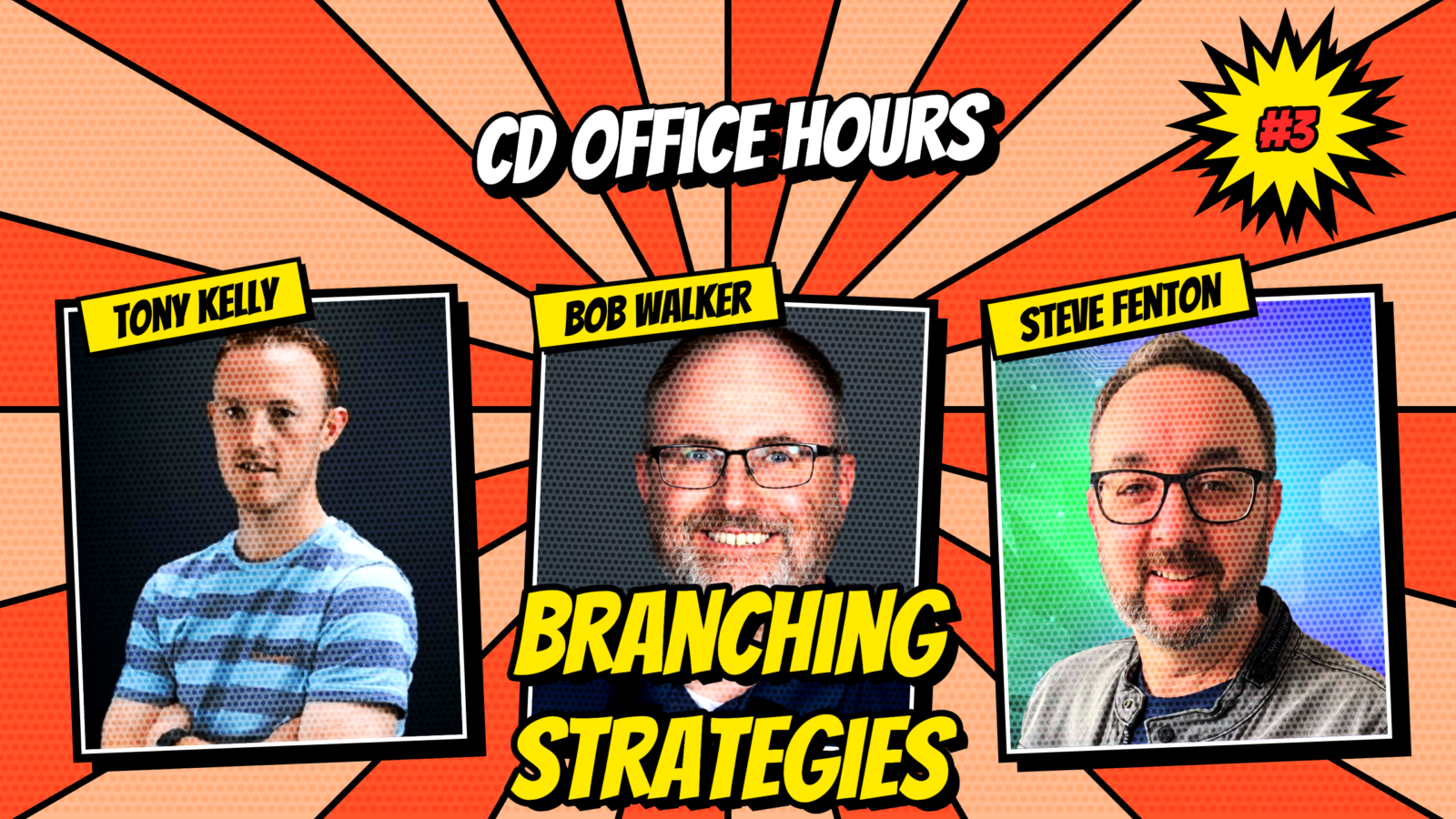
    Your branching strategy can support Continuous Delivery, or make it an impossible goal. Teams should assess the impact of how they branch on their ability to deliver software at all times, and that means there are some branching techniques that make software delivery more like walking in the dark through a field of rakes.

    Listen to find out more about:

    • The best branching strategies
    • The worst possible branching strategy
    • How branching fits into Continuous Delivery
    • Confessions from our worst merges

    Mentioned this week:

    Episode details

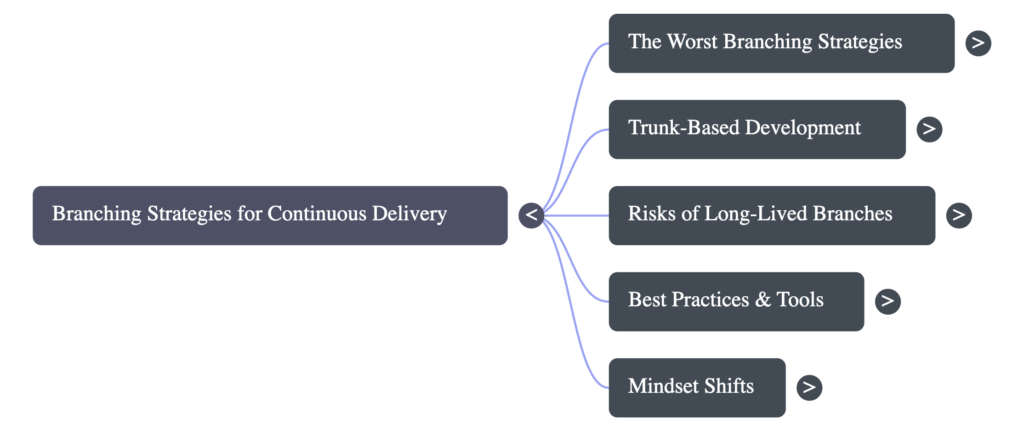
    Episode 3 map has entries for the worst branching strategies, trunk-based development, risks from long-lived branches, best practices and tools, and mindset shifts.

    You can also watch episodes on YouTube.
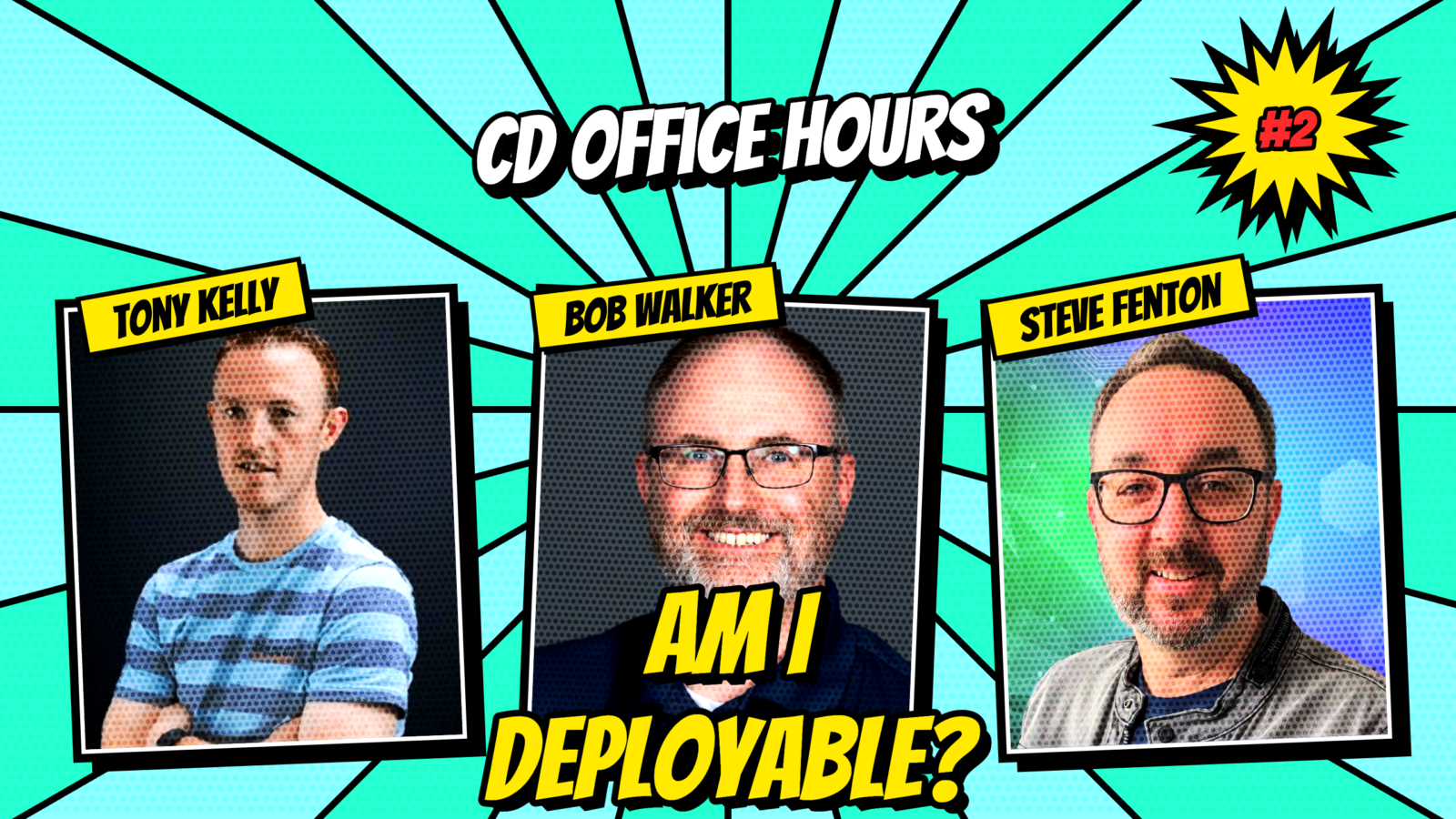
  • CD Office Hours Ep.2: Am I Deployable?

    CD Office Hours Ep.2: Am I Deployable?

    Continuous Delivery Office Hours Ep.2: Am I Deployable?
    Continuous Delivery Office Hours
    CD Office Hours Ep.2: Am I Deployable?
    Loading
    /

    To ensure software is deployable, teams must shift from manual testing to automated pipelines. Automation provides immediate feedback, captures institutional knowledge, and reduces long-term costs. Strategies like the Strangler Pattern help modernize legacy code for greater reliability.

    Listen to find out more about:

    • How deployability depends on continuous automated verification
    • How automation is a long-term crucial investment
    • Strategies for modernizing legacy code
    • How automated tests are a form of living documentation
    • Why leadership buy-in and cultural alignment is a necessary pre-condition

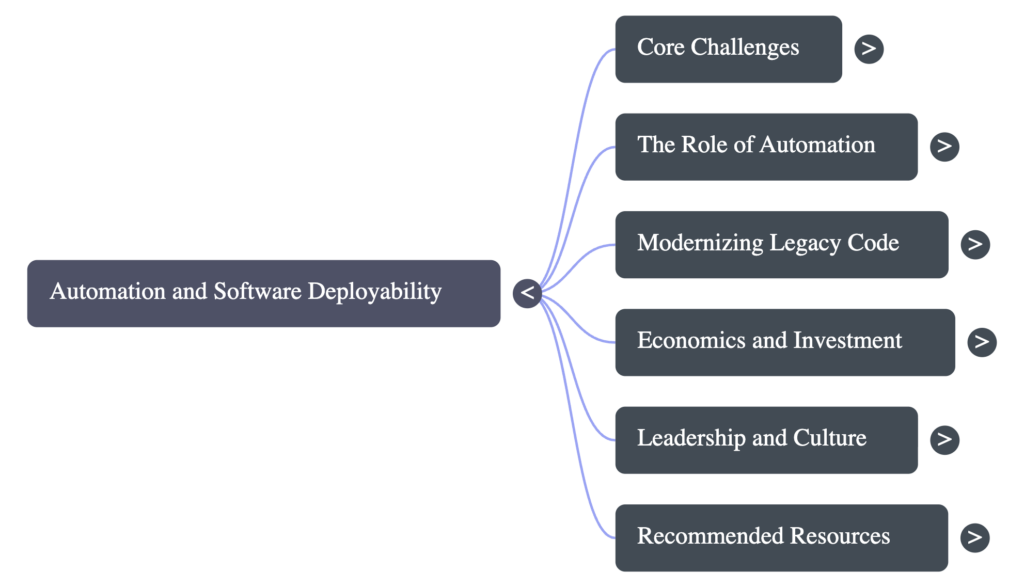
    Episode map

    Episode two map covering core challenges, the role of automation, modernizing legacy code, economics and investment, leadership and culture, and recommended resources

    You can also watch episodes on YouTube.
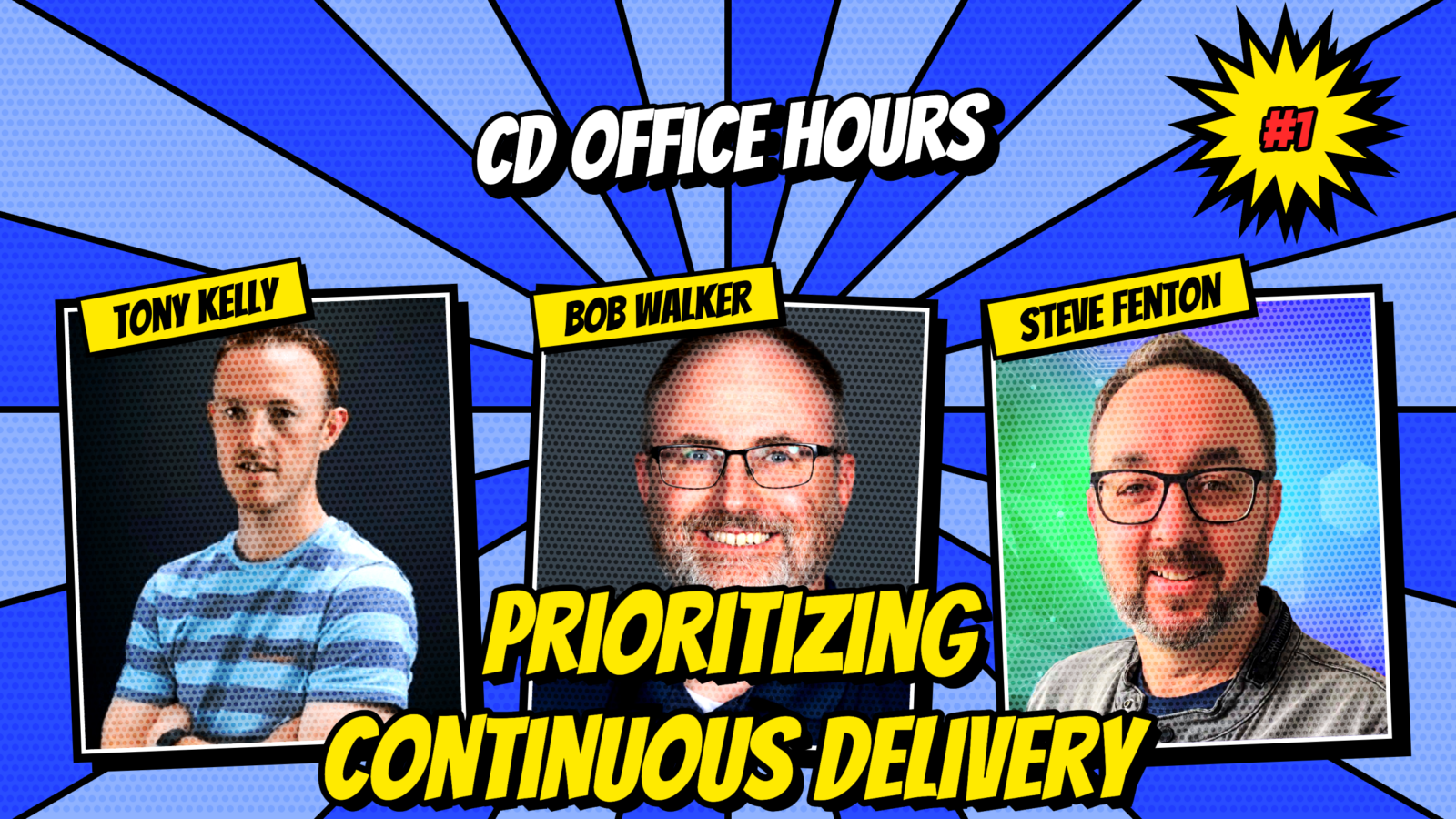
  • CD Office Hours Ep.1: Prioritizing Continuous Delivery

    CD Office Hours Ep.1: Prioritizing Continuous Delivery

    Continuous Delivery Office Hours Ep.1: Prioritizing Continuous Delivery
    Continuous Delivery Office Hours
    CD Office Hours Ep.1: Prioritizing Continuous Delivery
    Loading
    /

    Tony Kelly hosts our first episode of Continuous Delivery Office Hours, with Bob Walker and Steve Fenton.

    In this episode of Continuous Delivery Office Hours, we ponder why prioritizing Continuous Delivery (CD) is essential for managing risk. We challenge the common instinct to reduce deployment frequency after failures, using a dentist analogy to explain how delaying deployments increases pain and risk by allowing unchecked changes to accumulate.

    We advocate decoupling “deployments” (moving code) from “releases” (exposing features) using trunk-based development and feature toggles, which lets you test safely in production and avoid the deadlocks of complex dependency management.

    Listen now to discover:

    • The dentist paradox
    • Guts on the table
    • The dog and biscuit
    • Steering with your knees

    Episode details

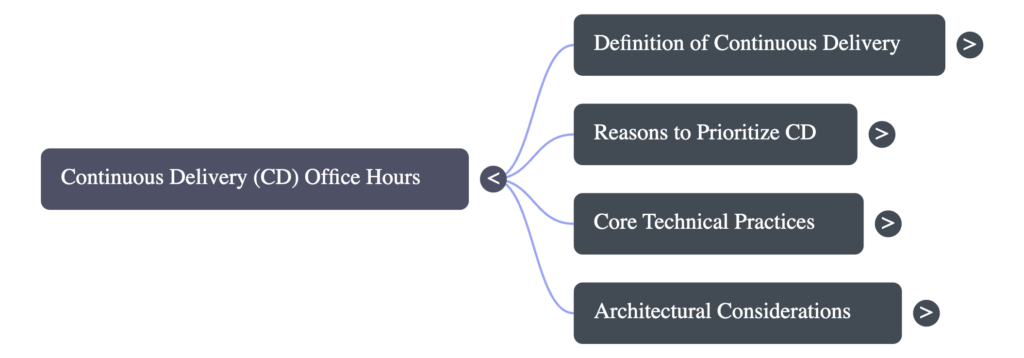
    Mind map with entries for definition of Continuous Delivery, reasons to prioritize it, core technical practices, and architectural considerations.

    You can also watch episodes on YouTube.